Login
Signup
The Favela That Disappeared: What Catacumba Teaches Us About Cantagalo’s Future
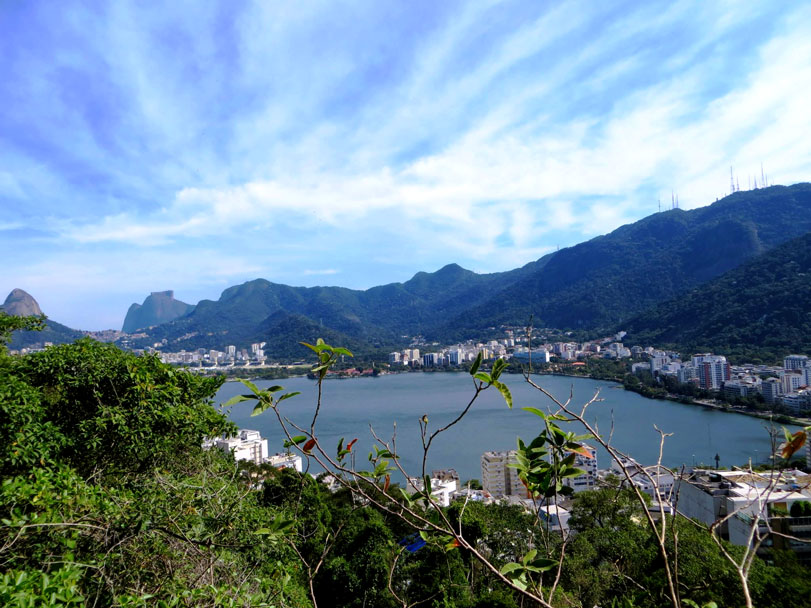
Parque da Catacumba, Foto credits: Pedro da Cunha e Menezes
by Diana Nijboer
A park with a missing story
Walk down from Cantagalo toward the Lagoa and you reach a quiet, leafy hillside. Today it is the Parque da Catacumba, a nature park with trails, sculptures and a view over the water. Most visitors have no idea that thousands of people once lived there.
Until 1970, this hillside was Catacumba, one of the favelas of Rio’s South Zone. It was a neighbor to the communities where EduMais teaches today. Then, in a matter of months, it was gone.
What happened to the people of Catacumba, and to their children and grandchildren, is one of the most closely documented stories of urban poverty anywhere in the world. It also holds lessons that shape how we work with young people in Cantagalo, Pavão-Pavãozinho and Tabajaras.
Forty years, three generations
In 1968 and 1969, a young American researcher named Janice Perlman lived in three poor communities in Rio. Catacumba was one of them. She interviewed hundreds of residents about their work, families, hopes and politics.
At the time, many experts saw favelas as places of crime, chaos and apathy. Perlman found something very different. Residents worked hard, cared deeply about their families and dreamed of the same things as anyone else: a decent home, a good job, a better life for their children. What they lacked was not ambition. It was opportunity. She published these findings in 1976 in The Myth of Marginality.
Around 1999, she went back. Over several years, her team tracked down as many of the original interviewees as they could find. They then interviewed their children and grandchildren too. The result, Favela: Four Decades of Living on the Edge in Rio de Janeiro (2010), follows real families across three generations.
The day Catacumba disappeared
In 1970, under the military government, Catacumba was demolished. Its residents were moved to public housing estates far from the South Zone, some of them more than an hour away by bus.
Perlman documented what this cost. People lost the jobs they could walk to in Ipanema, Copacabana and the Lagoa. Neighbors who had helped each other for years were scattered. Many families took on housing payments they struggled to afford. A community that worked was broken up, and the land became a park.
The lesson Perlman draws is clear: removing a favela does not remove poverty. It mostly removes people from opportunity.
What changed, and what didn’t
When Perlman returned, she found real progress. Wooden shacks had become brick homes. Most communities had water, electricity and paved paths. And each generation had far more schooling than the one before. Many grandparents had never learned to read; their grandchildren were finishing secondary school.
But she also found three hard truths.
More school did not mean better jobs. The job market had changed. Factory work disappeared and informal work grew. Young people with far more education than their parents often struggled more to find stable employment. A diploma that once opened doors had become the bare minimum.
The address became the barrier. When residents were asked what held them back, being from a favela ranked as a bigger obstacle than skin color or gender. Many hid their address on job applications.
Fear replaced eviction. In the 1960s, residents feared most that their homes would be torn down. By the 2000s, they feared violence most, from armed groups and from police operations. Many of the families Perlman followed had lost a young relative. Fear made people stay home, trust less and withdraw from community life.

The bridges that make the difference
So who got ahead? One of Perlman’s most striking findings was that connections mattered enormously. People with friends, mentors, coworkers or contacts outside their own community were far more likely to find good jobs and move forward. Isolation kept people stuck.
This is the heart of what we try to do at EduMais. Every program is, in its own way, a bridge.
English opens doors to jobs, study and conversations far beyond the community. Our students work toward a B2 level, enough to study and work in English.
Enter the Labor Market tackles the gap Perlman found between schooling and work. Students build CVs and LinkedIn profiles, practice interviews and visit real companies.
Entrepreneurship and Serious Game Design give young people the tools to create their own opportunities, and to solve problems in their own community.
Microsoft Office give young people the digital literacy tools so necessary in today’s age.
Exchange sends outstanding students abroad, building the kind of wide network Perlman showed is so powerful.
Our volunteers from around the world become mentors, friends and contacts, connections that last long after a class ends.
And because so many of our students carry the weight of growing up around violence, we teach with Positive Discipline and trauma-informed methods. A safe classroom is where learning starts.
Perhaps most importantly, our team is made up of former EduMais students. They prove every day what Perlman saw back in 1969: young people from the favelas are not the problem to be solved. They are the ones solving it.

Writing a different story
The hillside of Catacumba is beautiful today. But it is also a reminder of a choice Rio once made: to move poor communities out of sight instead of investing in the people who lived there.
Cantagalo, Pavão-Pavãozinho and Tabajaras are still here, with all their energy, talent and ambition. The question Perlman’s research leaves us with is not whether young people in these communities have potential. They always have. The question is whether the rest of us will build the bridges that let that potential reach its destination.
You can help write that different story. Volunteer, donate or partner with us, and become one of the connections that changes a young person’s future.
Further reading: Janice Perlman, Favela: Four Decades of Living on the Edge in Rio de Janeiro (Oxford University Press, 2010), published in Portuguese as Favela: Quatro décadas de vida no limite no Rio de Janeiro.