Login

Signup

English Program

It almost goes without saying that speaking English is a vital skill in the modern world. The official language of 53 countries, approximately 1.5 billion people now speak English worldwide, whether natively or as a second language.

English is also the international language of communication, the internet, science, diplomacy, and tourism, as well as many textbooks and universities.

Consequently, learning English is one of the best ways to open doors for our kids. It is their “passport” to the world and better opportunities in the future. Above all, speaking English is fun!

As outlined in Our Methodology, our teaching style is heavily influenced by the UERÊ-MELLO approach. This is an internationally recognised educational model for children and young people in areas of social risk.

Adapted to include the insights of Positive Discipline, our English classes are thus designed not only to work on language skills but also have our students’ well-being at their core.
IMG_6518
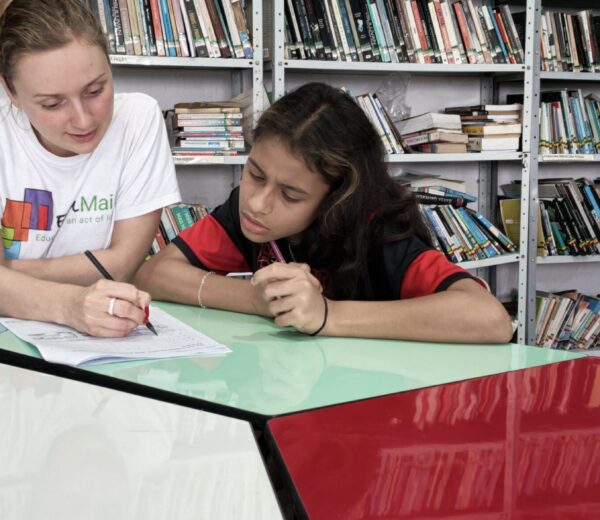
Student and teacher writing. Books in the background

Trauma-Informed Lesson Content

Traumatised by violence, children who grow up in high-risk social areas can develop learning difficulties and blocks. Many struggle to make associations, forget things easily, and experience slowed or impaired reasoning.

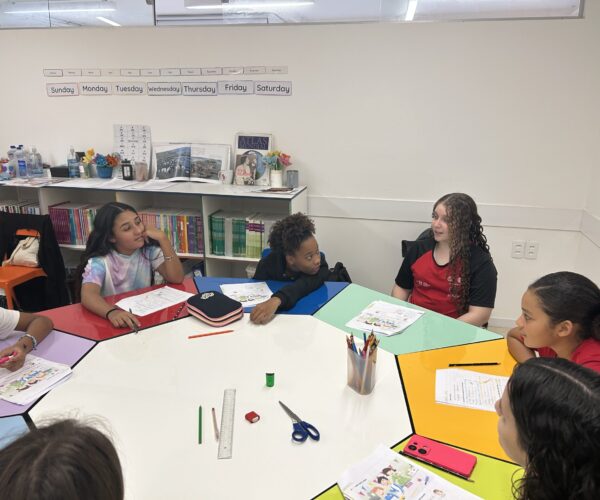
We design our English lessons with this in mind. To meet students’ needs, classes are quick, creative, fun, and stimulating—highly interactive, with plenty of pair and small-group work led by teachers and co-teachers.

Guided by the UERÊ-MELLO pedagogy, lessons blend speaking, grammar awareness, reading, and listening—with practice at the heart of every session. Students learn by doing: real-life dialogues, games, quick drills, and tasks that get them talking from the start.

Volunteers coach confident conversation, and donor support equips classrooms with the materials and safe spaces that make daily practice possible.

To help pupils build security and self-belief, we revisit key topics throughout the year. This strengthens memory without discouragement. Confidence breeds enthusiasm—and helps students imagine a positive future.

Inside the Edumais Classroom

The combination of the UERĂŠ-MELLO methodology and Positive Discipline also has the following practical applications for the EduMais English classroom.

  • Primarily, our classroom is a positive, fun place where students can enjoy learning without feeling anxious. This is particularly important for students with low self-esteem, who believe themselves incapable of learning. With appropriate encouragement, they can eventually acquire the self-confidence to realise their potential and capabilities.

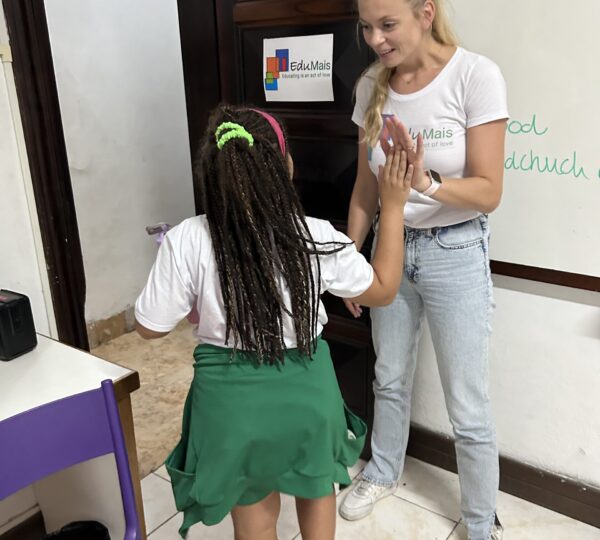
  • When students enter the classroom, we give them a warm greeting and ask them how they are. If they feel particularly bad or blocked, the chance to express themselves freely can be very cathartic. They become calmer and better prepared to learn.

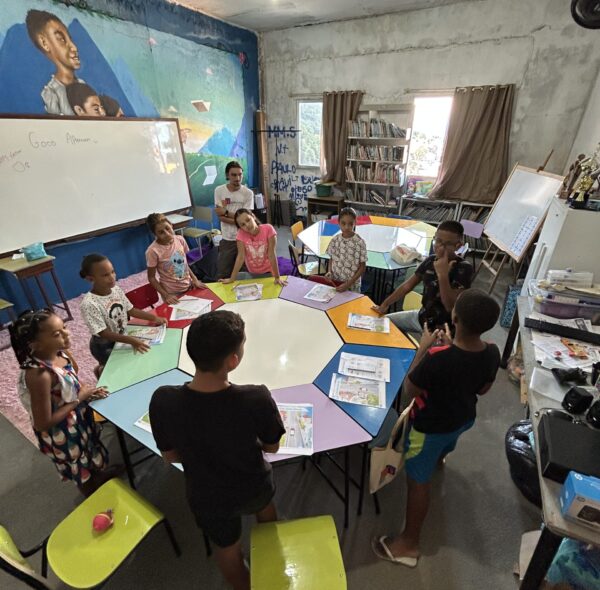
  • Students sit in a horseshoe shape, creating a sense of openness. There is also no teacher’s desk in our classroom. Rather than constructing a “wall” between the teacher and students, this ensures a more democratic space.

  • Lastly, with Positive Discipline, our teachers don’t get stressed or shout. But they do respect their own limits while also encouraging the students to respect theirs. This is vital for them to learn about themselves.

IMG_7647(1)
woman and kid. Kid leaving classroom and giving a high five

Weekly English Classes

English Classes

Every week, around 200 students aged 8 to 24 learn English with EduMais. Our motivated volunteers teach at three locations, and the length of a class depends on where it takes place:

Above all, we create a place of belonging, where every student feels welcome and safe to try, make mistakes and try again.

At the start of the year, students create their own rules of classroom conduct. They set the expectations for themselves, and we hold them to those expectations throughout the year.

We follow each student’s progress in English through regular testing and adjust the program to their level. Once they have a confident base, we challenge them more.

We also follow their behavioural development, recording social and emotional learning in class. All behaviour receives positive encouragement, so that it is repeated.

Would you also like to teach English in Rio de Janeiro’s favelas?

Volunteer for free as an English teacher with us!

Volunteer with us