Login
Signup
A Few Blocks Away and a World Apart
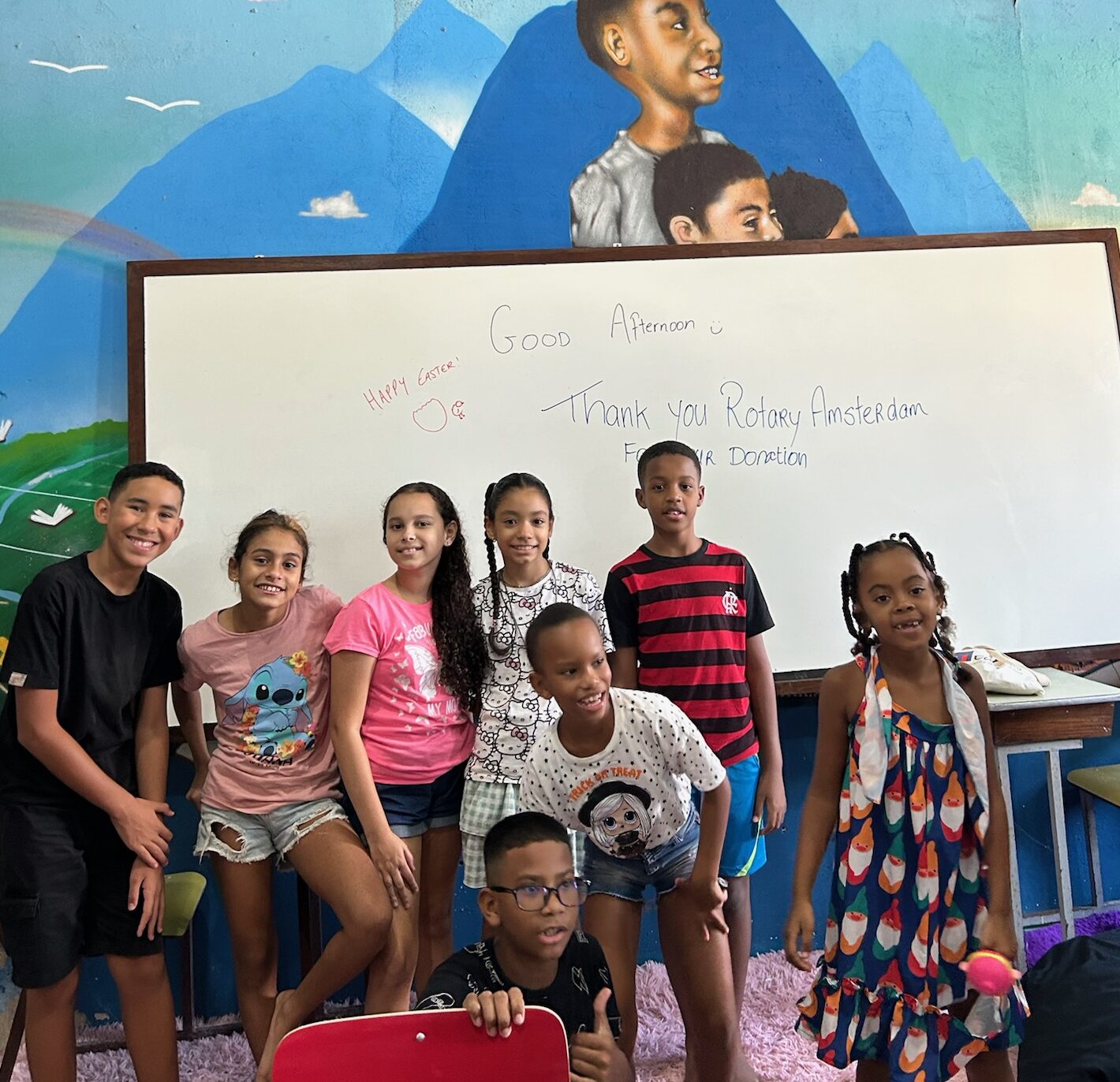
By Anna Papalexiou & Jackson Shine
Walk a few blocks from Copacabana beach. Past the tourists, the beachside kiosks, the luxury hotels. Past the point where the postcard ends. The Tabajaras favela climbs up into the hillside above the city’s most famous shore, home to around 30,000 people whose daily reality sits in sharp and painful contrast to the world visible from their windows. The opportunities available to young people here are not just limited. They are structurally, deliberately scarce.
It was that reality, and a belief that it doesn’t have to be permanent, that brought EduMais to Tabajaras.
A Connection That Started With a Student
EduMais was founded in 2016 in the favelas of Pavão-Pavãozinho and Cantagalo. From the beginning, the organisation worked on a simple belief: education is not a privilege. It is a right. Over the years, that belief has become programmes, partnerships and, for hundreds of young people, a real change in what feels possible.
The expansion into Tabajaras did not come from a strategy document or a funding bid. It came from a former student.
A young person who had passed through EduMais’ programmes made an introduction. They knew a local NGO in Tabajaras called Associação Futuro Legal (AFL), people with deep roots in the community and a space they were willing to share. And so they said: you should meet them.
That introduction is worth sitting with for a moment. It is not just a logistical detail. It is evidence of something rarer and harder to build than any curriculum: the kind of trust that makes a young person, years after leaving an organisation, want to bring it into the community they love. EduMais and AFL met because of that trust. And in October 2024, Saturday classes began.
A Room That Needed Work
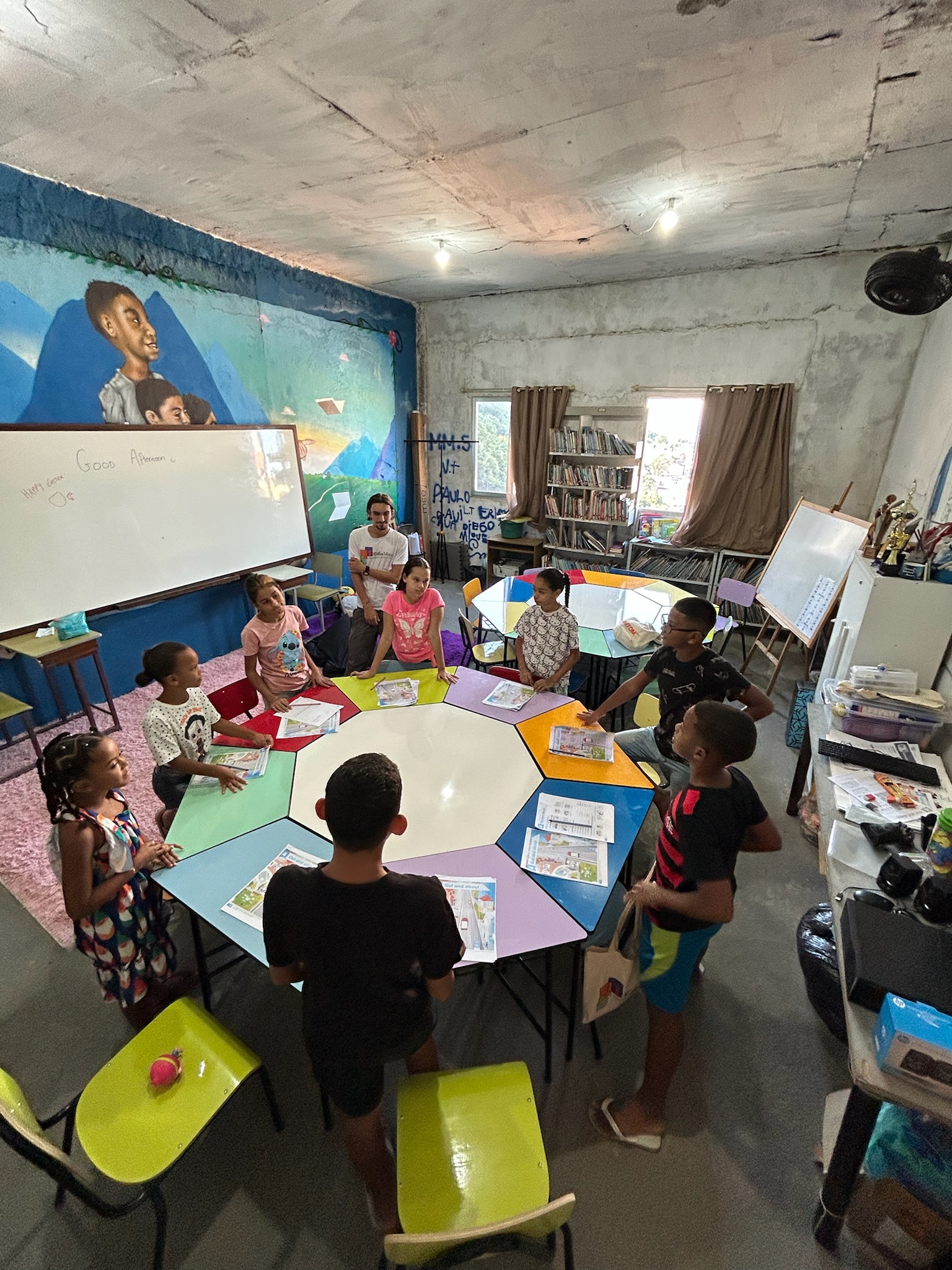
The space AFL offered was not a school. It was a shared community room that hosted sports sessions, church services, and boxing training. When English classes began, some students sat on the floor because there were not enough chairs.
That is not a detail EduMais is comfortable with. Every child deserves a room that tells them their learning matters. A chair. A desk. A workbook with their name in it.
Through the generosity of supporters and donors, that room was transformed. By the end of 2025 and into early 2026, it had proper furniture, classroom materials, and educational resources. The boxing gloves didn’t go anywhere. But on Saturday mornings, the room belonged to the students.
There is something that happens when a child walks into a space arranged specifically for them. When volunteers from the UK and China and beyond are sitting there, ready, because they chose to be. It is not a lesson. It is a message. It says: you are worth this.
What a Saturday Looks Like
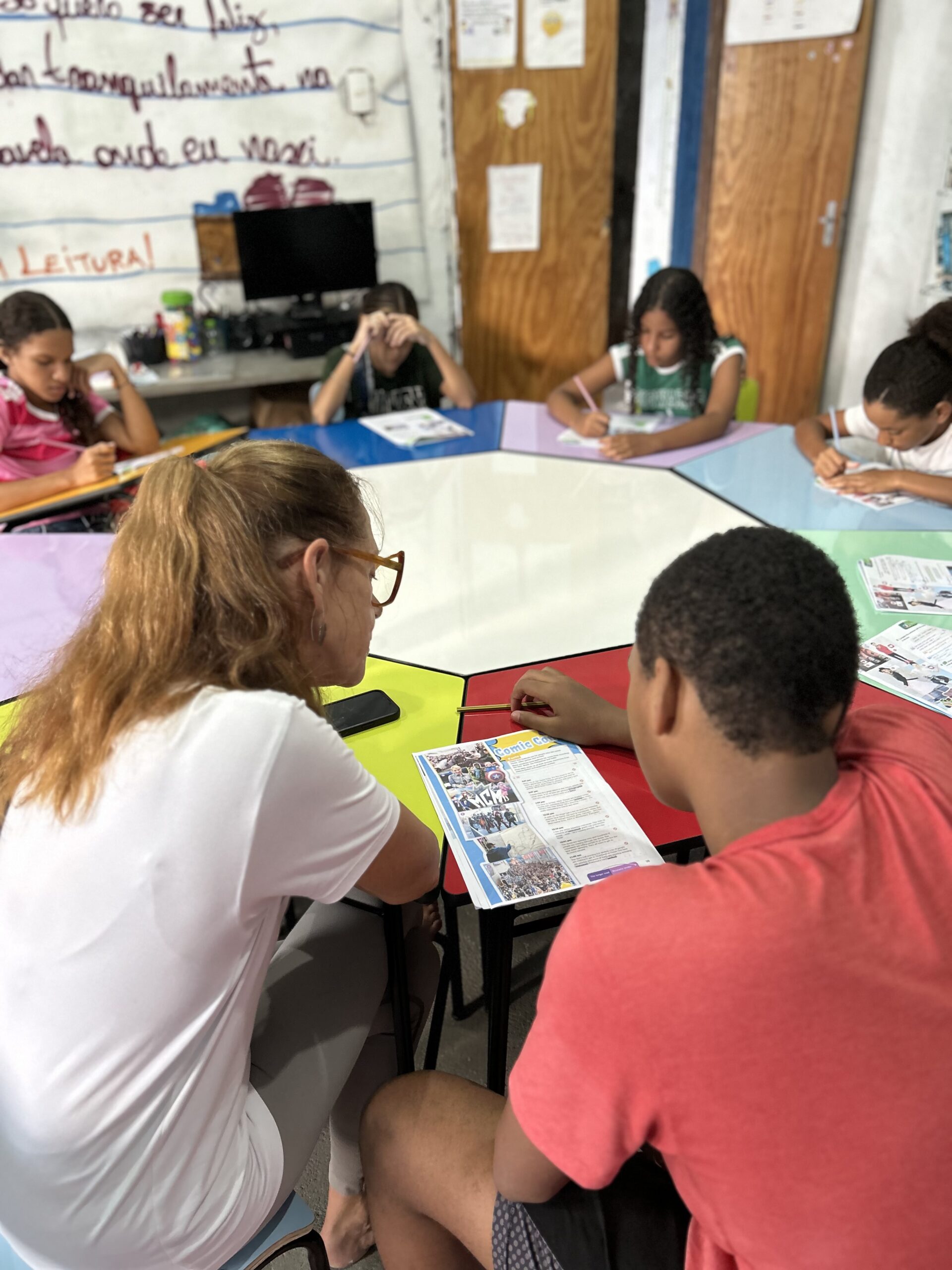
Two groups of students come in every week. The younger ones are eight to eleven. The older group is twelve to fifteen. They work through a curriculum EduMais has been refining for ten years, one that treats language learning and personal development as inseparable.
The classes are not quiet. They are built around play and collaboration, trust exercises and creative challenges. Students don’t just learn words. They practise thinking, arguing, imagining, communicating. A Saturday morning in Tabajaras is not a supplementary lesson tacked onto a school week. For many of these children, it is the part of the week where someone looks at them and genuinely asks: what do you think?
For young people growing up surrounded by poverty and, too often, violence, that question is not small.
Twenty-Five Students and What Comes Next
More than 25 children in Tabajaras now have access to free, high-quality English education. Volunteers have watched them grow in ways that show up in class and in ways that don’t: the student who started the year barely speaking and now argues back, the one who used to drift and now stays after to ask questions.
English opens doors in Rio that other languages don’t. The city’s tourism industry is vast and it rewards fluency. But the longer vision is bigger than employment. Students who stay with the programme can reach a level of English that unlocks university scholarships and study abroad opportunities. And as they grow, they become eligible for EduMais’ full range of courses, from game design to digital skills, preparing them for a world that is changing fast and that they deserve to shape.
Some of them will travel. EduMais has taken groups of students to Poland and the United States. For a teenager from Tabajaras, that journey is not a reward. It is a reframing. It says: the world is not somewhere else. It is also yours.
What It Has Meant for AFL
The partnership has changed AFL too. Before EduMais arrived, AFL focused on sport and extracurricular activities. Valuable work, but bounded. Now it has an educational arm it did not have before.
The children of Tabajaras can train their bodies and their minds in the same building, through organisations that both believe in who they are and who they are becoming. AFL’s reach has grown. Its sense of what it can offer has grown. That is what genuine partnership does. It changes both sides.
A Beginning
EduMais has always played the long game. It follows students after they leave. It tracks not just their test results but their lives: the university applications, the first jobs, the moments when something learned on a Saturday morning turns out to matter ten years later.
Twenty-five students in Tabajaras is not an arrival. It is a beginning. And beginnings, in EduMais’ experience, are stubborn things. They tend to grow.
The favela is a few blocks from Copacabana. That distance is getting a little shorter, one Saturday at a time.
EduMais is a Rio de Janeiro-based NGO offering free educational programmes to young people in the favelas of Pavão-Pavãozinho, Cantagalo, and Tabajaras. To learn more or support the work, visit edumais.org or follow us at @edumaisrio on Instagram and TikTok. To help EduMais continue its mission, consider donating here.