Login
Signup
Building Belonging: How Positive Discipline Creates Safe Spaces for Learning in Rio’s Favelas
By Anna Papalexiou- Social Work Intern with EduMais
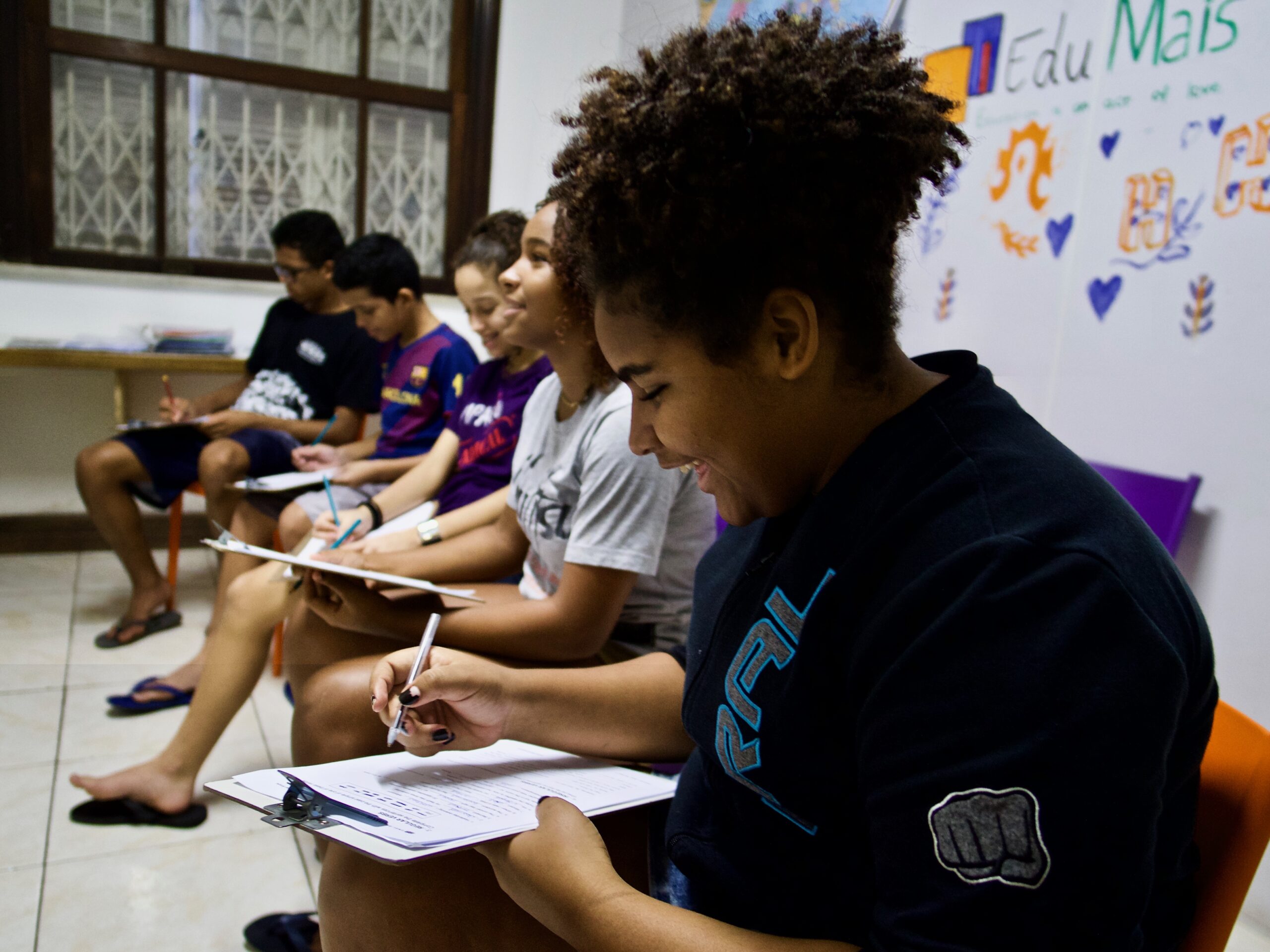
When children walk through the doors of EduMais, they’re not just entering a classroom; they’re stepping into a community that believes in their potential. In the interconnected favelas of Pavão-Pavãozinho & Cantagalo (PPG), where children navigate daily realities that include police operations, economic hardship, and systemic neglect, the way we approach discipline isn’t just a teaching method; it’s a statement about who these children are and what they deserve.
Understanding the Context: Growing Up in PPG and Tabajaras
The favelas of Pavão-Pavãozinho & Cantagalo (PPG) and Tabajaras sit on the hillsides between some of Rio’s wealthiest neighbourhoods – Copacabana, Ipanema and Lagoa. This geography tells its own story. These communities, each home to approximately 30,000 residents, exist in a space of stark contrasts: creativity and violence, resilience and precarity, community strength and institutional abandonment.
Children here grow up navigating what researchers call “territories of public (in)security”. They learn early to read the streets, to understand when it’s safe to play outside, to recognise the sounds that mean danger. Many experience what adults might call trauma but what for them is simply Tuesday; the loss of pubic services during conflicts between armed groups, the ever-present awareness that their neighbourhood is viewed by much of society as dangerous rather than as home.
Yet these same children also grow up immersed in rich cultural traditions, surrounded by the creativity that birthed the Museu de Favela, supported by networks of care that extend far beyond nuclear families. They develop “local wisdom”; an intimate knowledge of their community, strong bonds of solidarity with peers, and remarkable resilience. This is the context in EduMais works across both PPG and Tabajaras. And it’s why the methodology we use matters so profoundly.
What is Positive Discipline? Breaking Down the Approach
Positive Discipline emerged from the work of psychiatrists Alfred Adler and Rudolf Dreikurs, who believed that all human (including children) have a fundamental need to belong and to feel significant. When children misbehave, they’re often expressing unmet needs for connection, meaning, or autonomy. Rather than punishing them for these expressions, Positive Discipline asks: What is this child trying to communicate? What skills do they need to express their needs in healthier ways?
At its core, Positive Discipline rests on five key principles:
- Connection Creates Cooperation:
Children learn best when they feel they belong. In our classrooms, this mean creating spaces where every child knows they matter, where their voice is heard, and where they’re genuinely needed. This is particularly powerful in communities where children often receive messages- from media, from police presence, from the broader society- that they’re problems to be managed rather than people with potential.
- Mutual Respect Goes Both Ways:
Being kind and firm at the same time sounds simple, but it’s revolutionary. It means we don’t talk down to children, we don’t use shame or humiliation, and we don’t demand obedience without explanation. But is also means we maintain clear boundaries and expectations. We respect children enough to believe they can handle responsibility, and we respect ourselves enough to maintain structure.
- Long-term Thinking Over Quick Fixes:
When a child acts out, the easiest response is often punishment; send them to the corner, take away privileges, raise your voice. These might stop the behaviour in the moment, but what is the child learning? Often, they’re learning to avoid getting caught, to fear authority, or that they’re “bad”. Positive Discipline asks us to think about what the child is learning for the future. Are they developing problem-solving skills? Are they learning to understand how their actions affect others? Are they building the internal compass that will guide them when no adult is watching?
- Teaching Life Skills Through Experience:
Children don’t learn respect by being lectured about it; they learn it by experiencing respectful relationships. They don’t learn problem-solving by being told solutions; they learn it by being involved in finding solutions. This is why our approach emphasises active participation, class meetings where children help solve problems, and giving children genuine responsibilities. Effective discipline must teach important social and life skills including respect, concern for others, problem-solving, and cooperation.
- Mistakes Are Opportunities to Learn:
Perhaps the most transformative principle is viewing mistakes not as failures requiring punishment, but as opportunities for growth. When a child makes a mistake, our question isn’t “How do we make them pay?” but “What can we learn from this? How can we repair any harm? What will we do differently next time?”. This approach builds resilience, something these children have in abundance, but which deserves to be honoured and strengthened rather than broken down.
Why This Matters in Pavão-Pavãozinho & Cantagalo
The traditional approach to discipline in many Brazilian schools still relies heavily on control, punishment, and other “authoritarian” methods. But consider what it communicates to children who already live in communities where they’re subjected to aggressive policing, where their neighbourhoods are treated as problems, where dominant narratives suggest they’re destined for failure or violence.
Punitive discipline reinforces these messages. It tells children that adults with power use that power to control and punish. It teaches them that when you have authority, you use it to dominate. It suggests that they’re problems to be managed rather that people with potential.
Positive Discipline offers a radically different message. It says: You belong here. Your voice matters. You’re capable of solving problems. Mistakes don’t define you. You’re part of a community that believes in you.
This isn’t just feel-good philosophy; it’s backed by research showing that children who experience Positive Discipline develop stronger self-regulation, better social skills, higher academic achievement, and more positive relationships with adults and peers. Studies in schools using this approach report decreased behavioural challenges and increased academic excellence when social-emotional learning is integrates with academics.
More importantly for our context, Positive Discipline aligns with values already present in many Brazilian communities; the emphasis on relationship and collective well-being. Rather that imposing a foreign framework, we’re creating space for children to develop skills while honouring the relational strengths already present in their communities.
What This Looks Like in Practice
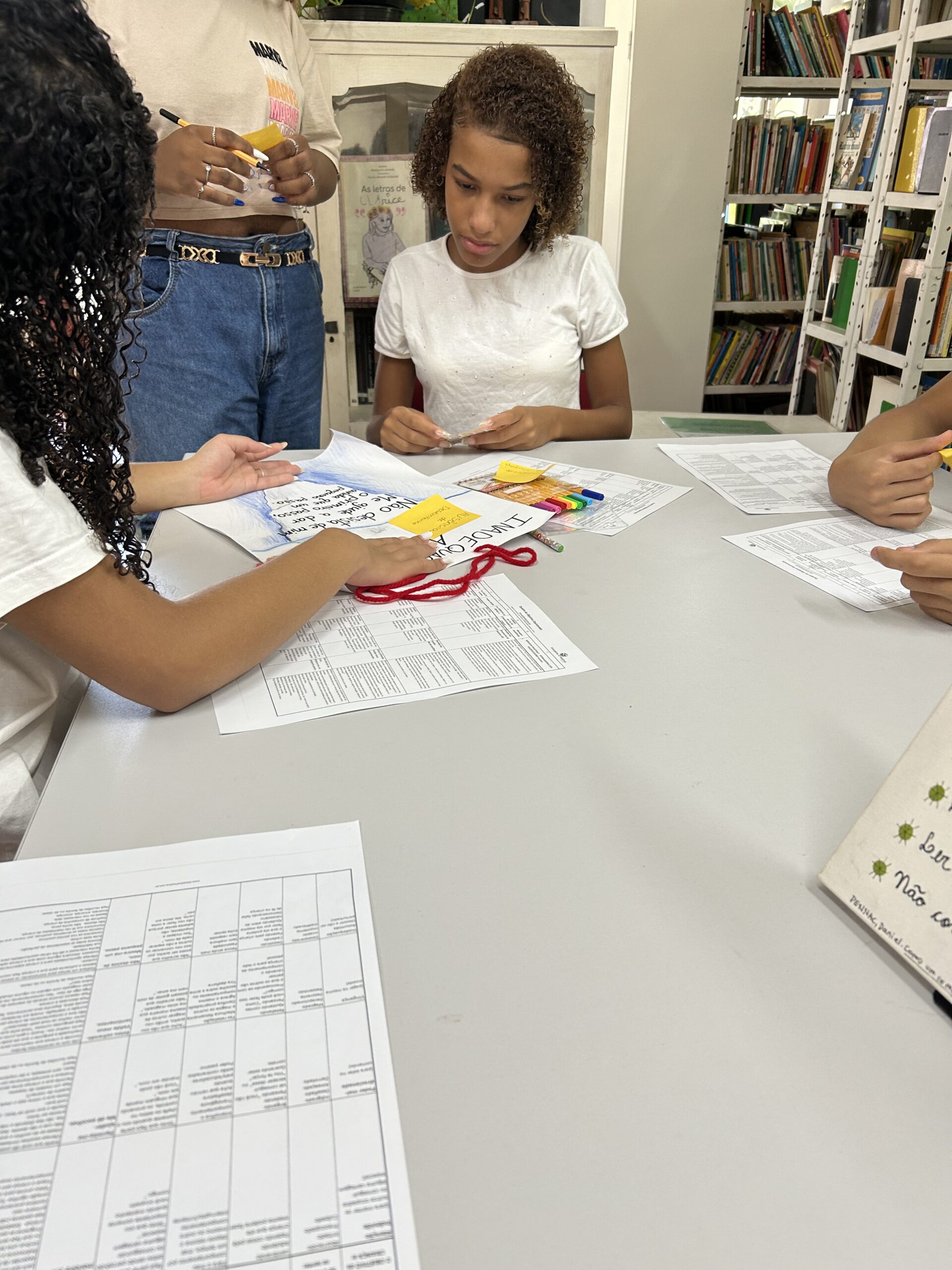
In an EduMais classroom, you might see:
Natural and Logical Consequences: Instead of arbitrary punishments , children experience consequences that relate to their actions. If materials aren’t put away, the next activity might be delayed while everyone helps organise. If someone hurts a peer’s feelings, they work together to repair the relationship. The focus is on learning and restoration, not retribution.
Encouragement Over Praise: Rather than saying “good job” (which can create dependency on external approval), teachers might say “You worked really hard on that problem” or “How do you feel about what you accomplished?”. This helps children develop internal motivation and self-assessment skills; crucial for young people who need to trust their own judgement complex environments.
Connection Before Correction: When a child is struggling, the first step is always to connect. This might mean a quiet moment to check in about how they’re feeling, acknowledging that something difficult might be happening at home, or simply offering a reassuring presence. Only once connection is established do we address the behaviour; because we know that children can’t learn when they’re in a state of stress or disconnection.
Building Community, Not Just Managing Behaviour
Perhaps the most powerful aspect of Positive Discipline is that it’s not really about discipline at all; it’s about building community. In the favelas, community isn’t an abstract concept- it’s survival. It’s the network of care that extends across households. It’s the collective resistance to narrative that dehumanise your neighbourhood.
EduMais exists within this ecosystem. As we’ve discussed on our article on social ecosystems, we’re not separate from the community- we’re part of it, working alongside organizations like the Museu de Favela, Solar Meninos de Luz in PPG, and Associação Futuro Legal in Tabajaras, embedded in networks of mutual support. Our support to discipline reflects this understanding.
When we use Positive Discipline, we’re teaching children to be contributing members of a community; to consider how their actions affects others, to participate in collective problem-solving, to take responsibility not out of fear but out of care. These aren’t just classroom skills. They’re the skills of community leadership, of social change, of building the kind of world we want to live in.
The Long View: What Are We Actually Teaching?
In our article “How We Teach Is What We Teach”, we explored how methodology carries its own lessons. The way we respond to children teaches them about power, about relationships, about their own worth. When we use punishment and control, we teach that might makes right, that authority is about domination, that mistakes are shameful.
When we use Positive Discipline, we teach something different. We teach that:
- Power can be used to empower others, not just control them
- Relationships are built on mutual respect, not fear
- Mistakes are part of learning, not evidence of failure
- Everyone has something valuable to contribute
- Problems can be solved collectively
- You belong, exactly as you are
For children in PPG, who navigate daily messages about their supposed deficiency, their neighbourhoods’ supposed danger, their futures’ supposed limitation, these lessons are revolutionary. They’re not just about behaviour management- they’re about building a different vision of what’s possible.
Addressing the Challenges
Implementing Positive Discipline isn’t always easy. It requires more time and patience than simply punishing misbehaviour. It requires adults to manage their own emotions and reactions. It requires consistency, which can be challenging when children are dealing with inconsistent and sometimes chaotic circumstances outside the classroom.
There’s also the reality that Positive Discipline emerged from Western psychological frameworks, developed primarily in contexts very different from Brazilian favelas. We must be thoughtful about this; not simply importing a methodology wholesale, but adapting it to honour local knowledge, cultural values, and community strengths.
This means listening deeply and recognising that children here already demonstrate remarkable skills; the ability to navigate complex social environments, to care for younger siblings, to contribute meaningfully to household work. Rather than seeing these children through a deficit lens (what they lack compared to middle-class children in wealthy neighbourhoods) we ask: What strengths do they already have? How do we build on those?
It also means acknowledging that we’re operating within systems that are fundamentally unjust. No classroom methodology can solve the structural problems of police violence, economic inequality, or systemic racism. But within the space we create together, we can model something different; relationships based on dignity, communities based on mutual care, learning environments where every child’s humanity is honoured.
The Ripple Effect
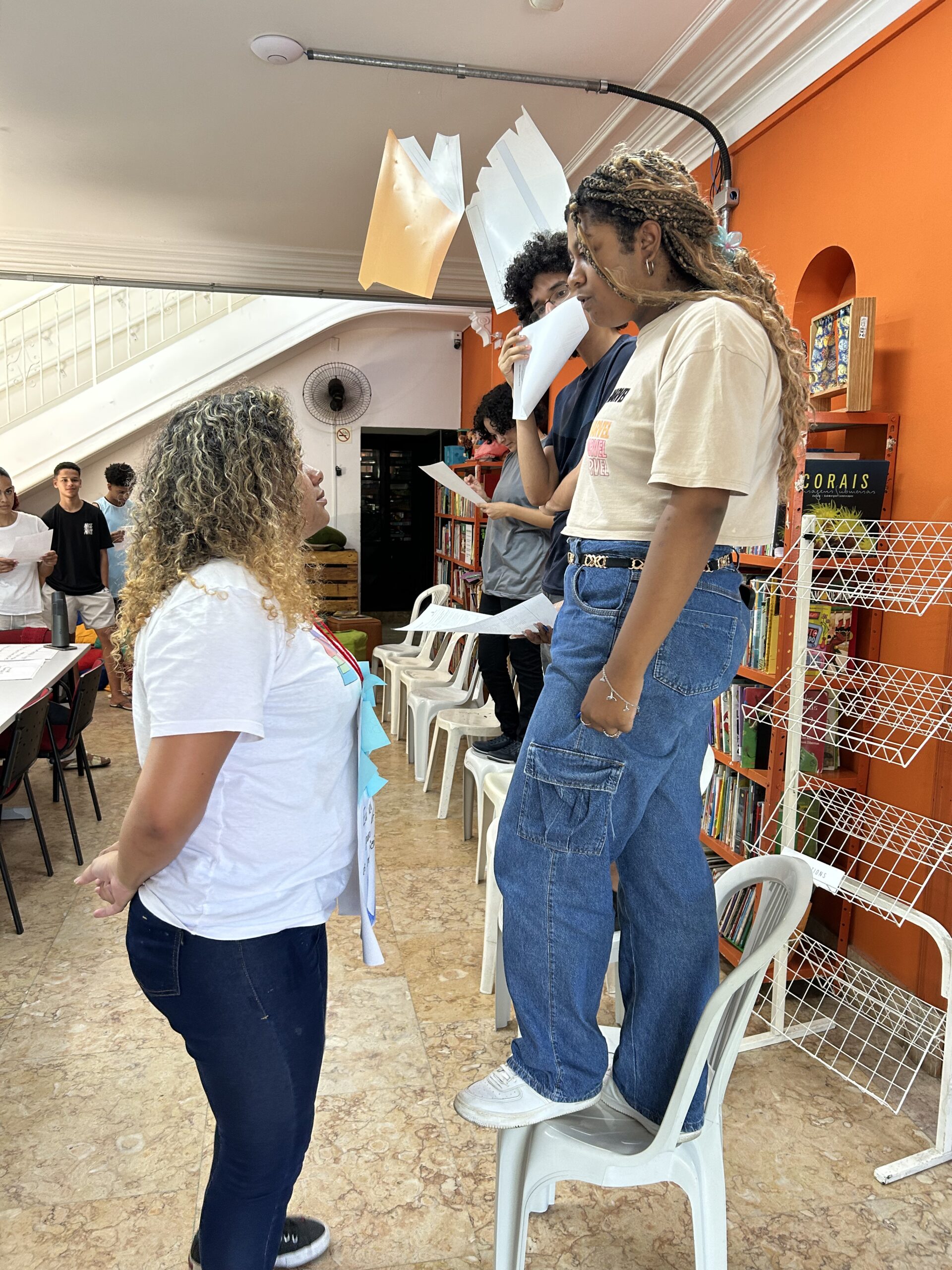
When children experience Positive Discipline, the effects extend far beyond individual behaviour. Research shows that schools using this approach see improvements in overall school climate, reduced conflicts, and stronger relationships among all members of the school community. Teachers report less stress and burnout. Parents often begin adopting similar approaches at home.
In PPG and Tabajaras, where children face significant pressures- including the pressure to work too young- the skills developed through Positive Discipline become protective factors. Children who’ve learned to problem-solve, to advocate for themselves, to seek support from trusted adults, are better equipped to navigate challenges. They’re more likely to stay in school, to resist pressures towards activities that put them at risk, to envision futures beyond what their circumstances might suggest possible.
Moreover, these children become models for younger siblings, peers, for their own future children. They carry forward a different understanding of what relationships can be, what community means, what they deserve. This is how change happens- not through top-down interventions, but through shifts in relationships, in daily practice, in the messages children internalise about who they are and what they’re capable of.
Moving Forward Together
Positive Discipline isn’t a perfect solution, and we don’t claim it to be. It’s an approach among many, constantly evolving as we learn from the children and families we work with. What makes it powerful in our context is its alignment with our core belief: that every child deserves to be treated with dignity, that learning happens best in relationships of mutual respect, and that the methodology we use matters as much as the content we teach.
In Pavão-Pavãozinho & Cantagalo and Tabajaras, where children demonstrate daily resilience, creativity, and strength, our job isn’t to “fix” them; it’s to create spaces where they can flourish. Positive Discipline helps us do that by building classrooms where connection comes before correction, where mistakes are opportunities rather than failures, where every child knows they belong.
As we continue our work, we remain committed to learning alongside the community, adapting our approached based on what children and families teach us, and holding fast to the belief that how we teach truly is what we teach. In every interaction, in every response to challenging behaviour, in every class meeting where children’s voices shape our collective life together, we’re teaching lessons about power, about worth, about possibility.
In a context where children receive so many messages about their supposed limitation, perhaps the most radical thing we can do is create spaces where they experience a different truth: You matter. You belong. You’re capable. We believe in you. Together, we can build something better.
This approach to discipline is just one aspect of EduMais’s holistic educational methodology. To learn more about our work in Cantagalo-Pavão-Pavãozinho and Tabajaras, or to support our programs, visit edumais.org